
Take a wooden dowel, hold a pencil against it, and spin the dowel. The pencil does not travel around the wood; the wood comes to the pencil. What you get is a cylinder — not because the pencil was guided in a circle, but because every point on the surface passed the pencil at the same distance from the axis of rotation.
That is turning. On a lathe, the workpiece rotates and a single-point tool is fed along one or two linear axes. The geometry comes from the rotation. The tool only has to be in the right place.
What the machine is actually doing
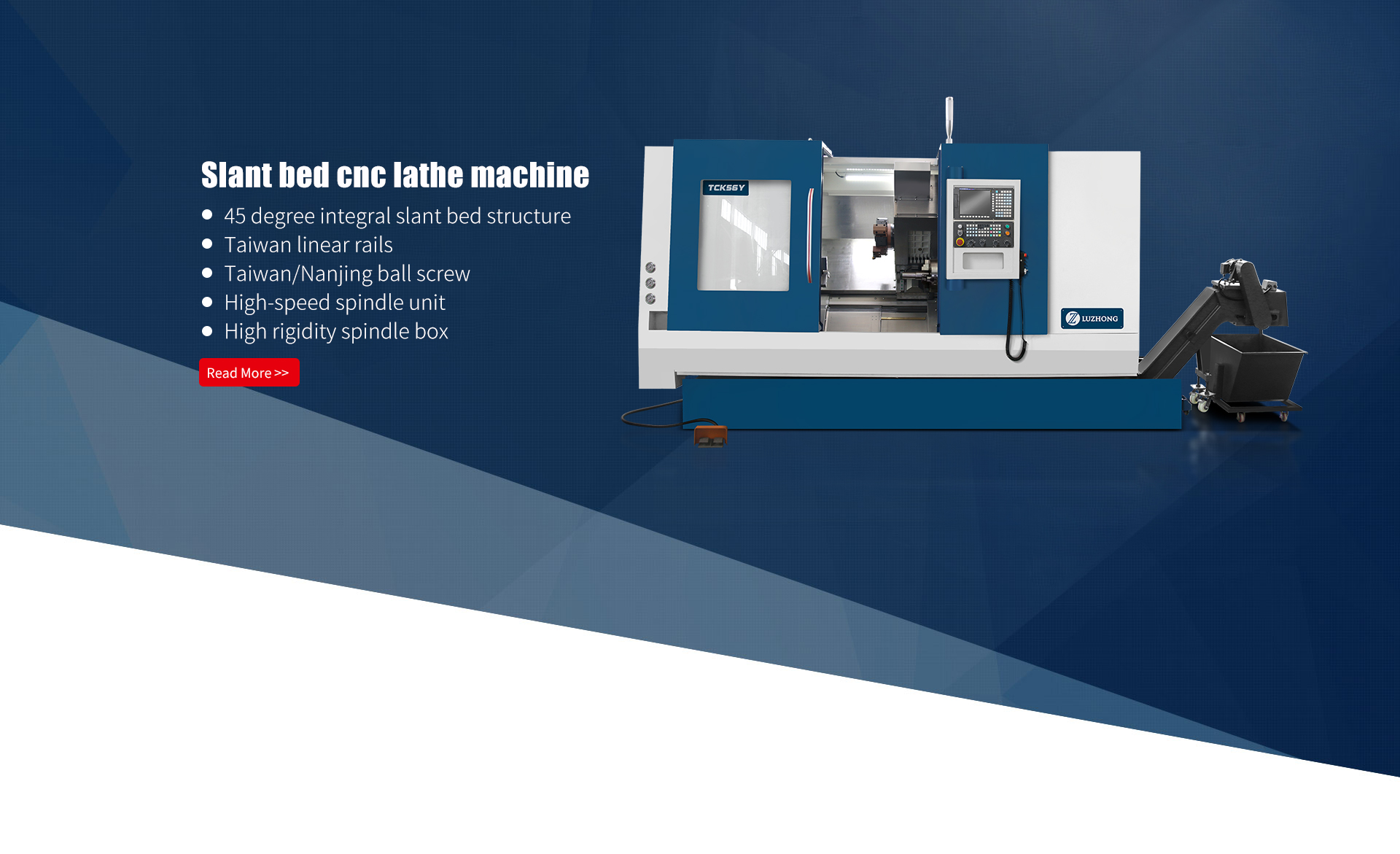
A basic lathe has four functional groups. The spindle rotates the work, usually through a chuck or a collet, sometimes between centres. The bed and guideways define straightness. The carriage and cross slide carry the tool along the axis of rotation (Z) and perpendicular to it (X). The tailstock supports the far end of long work.
On a CNC lathe, handwheels are replaced by ballscrews driven by servomotors, and the controller coordinates X and Z. Once two axes can move together under numerical control, straight turning becomes taper turning, then radii, then threads, then contours — the geometry is simply a path.




Copyright © Shandong Luzhong Machine Tool Co.,Ltd. All Rights Reserved